Photo Inspiration: 10 Sunset Terrace Compositions for Golden Hour
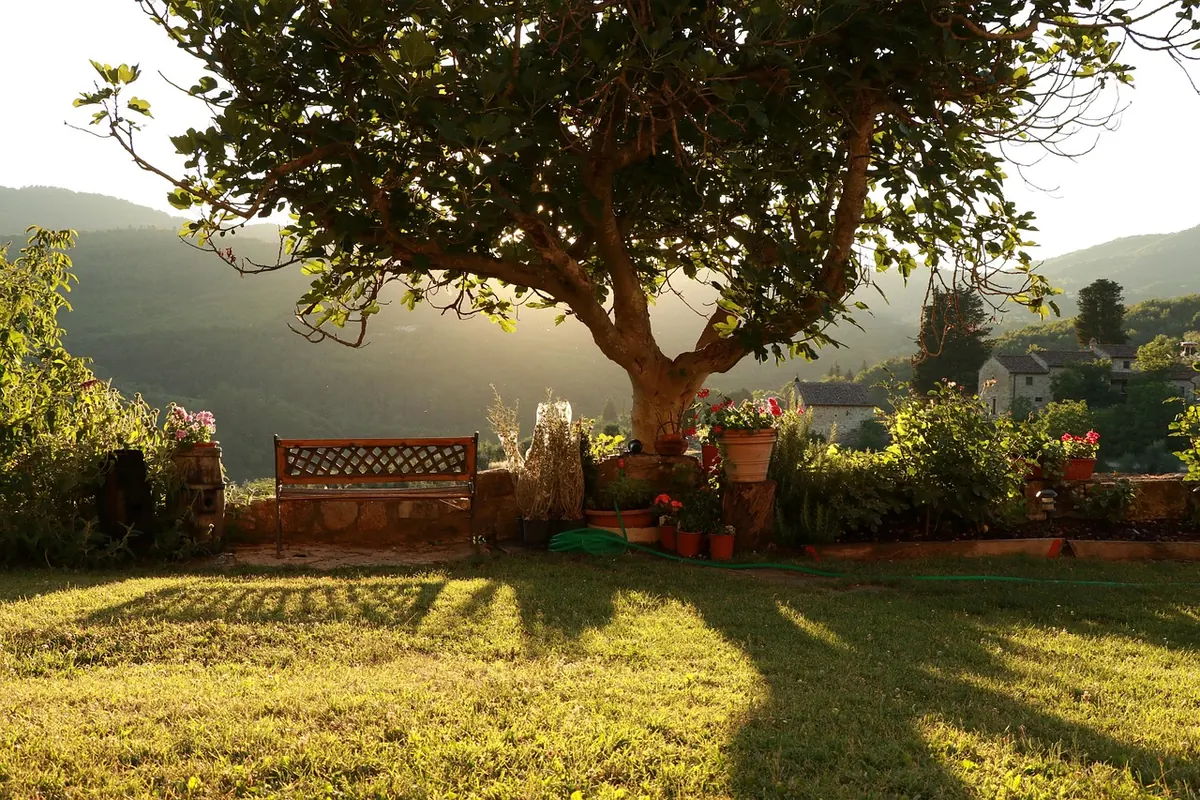
Golden hour on a terrace is generous with color and stingy with time. The sky turns, shadows stretch, and the frame you composed two minutes ago is already different. The good news is that stronger sunset photographs rarely come from more equipment. They come from recognizing a handful of composition ideas quickly and adapting them before the light moves on.
What follows are ten terrace compositions built around the elements almost every sunset spot provides: railings, tables, people, distance, and reflective surfaces. Treat them as prompts rather than rules. Shoot the first version, move two steps, and shoot the second. The difference between a snapshot and a photograph is often just that second look.
Railings: Use the Line, Then Break It
A railing is the most reliable foreground on any terrace. It gives the eye a path, anchors the bottom of the frame, and tells the viewer where they are standing. It can also become a visual cage if you let it cut through the horizon without purpose. Decide whether the railing is the subject, the guide, or the frame.
Composition 1: The Leading Line to the Sun
Get low and close to the top rail. Let it run from the lower corner of the frame toward the brightest part of the sky, creating a diagonal that pulls the eye into the scene. Keep the horizon clean: if the rail slices across it, step left or right until the line points toward the sun rather than through it. A vertical frame often works well here because it exaggerates the height of the sky and the length of the line.
Composition 2: Through the Railing
Move close enough that the vertical bars become a dark rhythm in the foreground, with the sunset glowing beyond. Focus on the distance and let the bars soften slightly. The gaps between them should feel deliberate, not accidental. This composition works especially well on balconies with wrought iron or simple vertical slats, where the repetition creates a frame within a frame.
- Check that the top rail is clean if it sits in the foreground; dust and fingerprints catch the light.
- Keep the camera level so the bars stay vertical and the horizon stays straight.
- Leave one clear gap for the sun or the brightest cloud; do not let a bar bisect the most interesting part of the sky.
Tables and Chairs: Photograph the Pause
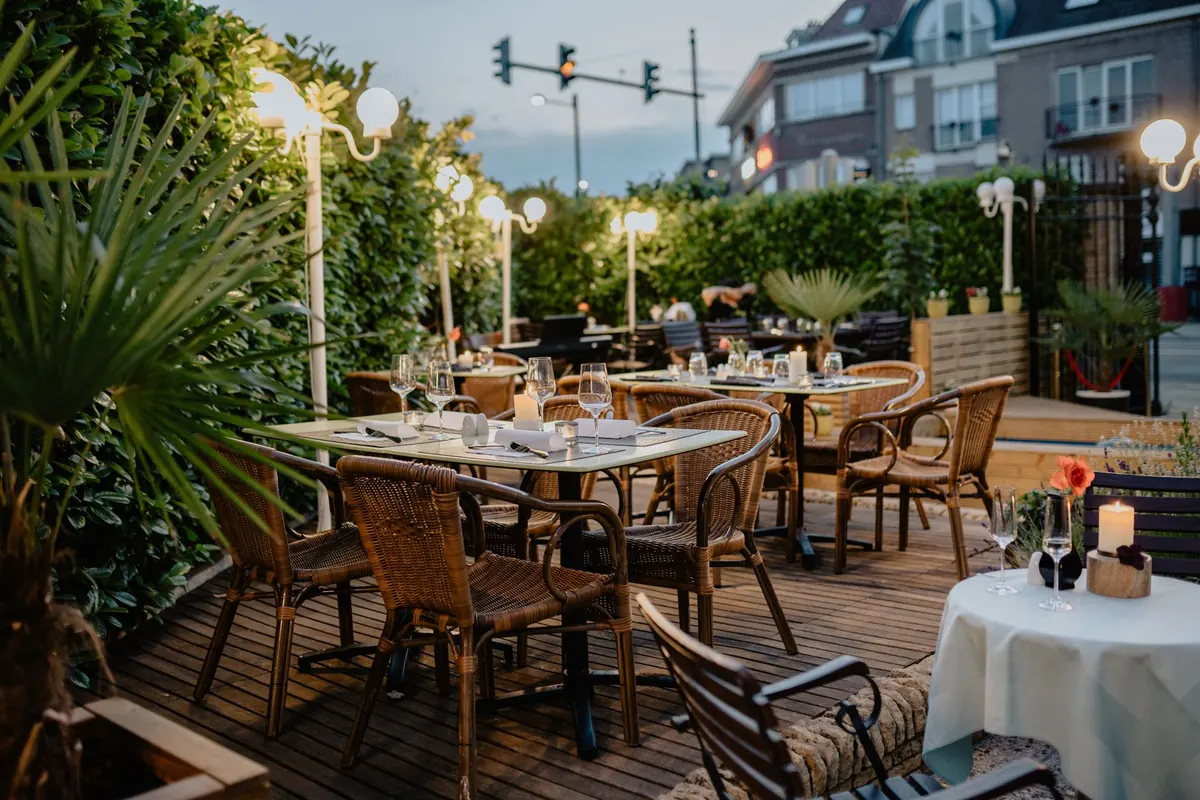
Terrace tables are quiet storytellers. A glass with condensation, a plate pushed aside, a chair turned toward the view: these details suggest a person without showing one. The trick is to photograph the table as a still life rather than a restaurant setup. Do not clear the crumbs. Do not straighten every napkin. A little evidence of use makes the scene warmer.
Composition 3: The Table Set for Two
Place the table edge diagonally across the bottom of the frame and let the sunset fill the upper half. Include two glasses or two cups, but avoid arranging them like a catalog. One glass can catch the sky, the other can stay dark. Shoot from a low angle so the tabletop becomes a thin line rather than a large empty surface. If the table is wet, move slightly until the brightest part of the sky reflects in the water.
Composition 4: The Empty Chair
An empty chair facing the horizon is one of the simplest compositions on a terrace. Place it off-center, leave negative space on the side it faces, and let the sky do the rest. A chair leg crossing the horizon can look messy, so shift your position until the legs sit against the sky or against a darker background. This frame works best when the chair is simple and the view is expansive.
The best terrace photographs often look like someone paused, not like someone posed.
People as Silhouettes, Not Portraits
Human silhouettes give scale and emotion to a sunset, but they can also become dark blobs that block the view. The solution is to think in shapes and gestures. Expose for the bright sky, let the people fall into shadow, and wait for a pose that reads clearly even without detail. A raised glass, a pointing arm, or a head turned toward someone else is enough.
Composition 5: The Figure at the Edge
Place one person near the edge of the frame, standing or sitting against the brightest part of the sky. Give them space to look into. Keep the horizon below their shoulders if possible, so the silhouette does not merge with the landscape. Wait for a gesture: hair moving in the wind, a hand on the railing, a phone lifted to take a picture. The gesture is what turns a dark shape into a story.
Composition 6: The Conversation
Two or three people can create a more dynamic silhouette than one. Look for separation between heads and shoulders so the shapes do not merge into a single mass. A small gap of bright sky between two people is often more interesting than a perfect group pose. Stay back and let the conversation happen. If you are close enough to intrude, ask first or frame the group loosely from behind.
Layered Horizons: Make Distance Visible
A sunset sky is only half the picture. The landscape below it needs structure, and structure usually comes from layers. Foreground, midground, background: when each layer has a different tone or texture, the image feels deep rather than flat. Haze helps. So does a longer lens, which compresses distant rooftops, hills, or masts into a stack of shapes.
Composition 7: The Three-Layer Sunset
Find a foreground element such as a planter, a railing, or the corner of a table. Behind it, include a midground of rooftops, trees, sea, or hills. Let the sky sit above both. Move left and right until the layers separate rather than overlap. Watch for repeated shapes: a row of chimneys, a line of cypress trees, or a cluster of boat masts. Repetition gives the eye something to follow through the depth of the frame.
Composition 8: The Framed Horizon
Use an arch, a window, a gap in plants, or the space under a pergola to frame the view. The frame itself can be dark and simple; its job is to push attention toward the sunset. Keep the camera square to the opening so the frame feels intentional. If the opening is small, expose for the sky and let the foreground go nearly black. This is one of the most forgiving compositions on a busy terrace because the frame hides clutter.
Reflections: Shoot the Sunset Twice
Reflections are not just a trick for rainy days. A glass of water, a polished table, a dark phone screen, or a puddle on the terrace can hold a second sky. The key is to get low, find the angle where the reflection appears, and decide whether the reflection is the subject or a detail within the larger scene.
Composition 9: The Glass on the Table
Place a glass, bottle, or sunglasses on the table and position yourself so the sunset appears inside it. Get close and low. Focus on the rim of the glass rather than the distant sky, then let the background soften. A wet tabletop doubles the effect. Keep the composition simple: one reflective object, one strong line of table edge, and plenty of sky. If the reflection is small, crop tighter rather than adding more props.
Composition 10: The Puddle or Polished Floor
After rain, or after the terrace has been cleaned, look for a shallow puddle or a polished stone surface. Crouch low and frame the reflection so it fills most of the image, but leave a thin strip of real ground at the edge. That strip tells the viewer what they are looking at. Focus on the reflection itself, not the ground around it. Protect your camera from water, and avoid standing where you block the light.
A Short Field Guide for the Last Twenty Minutes
Arrive before the light turns. Walk the terrace without the camera first and note where the railing points, where the table sits, and where people naturally gather. Then work through the compositions in order of speed. Start with the railing and the horizon while the sky is still bright. Move to the table details as the light warms. Save the silhouettes and reflections for the richest color, when contrast is strongest.
- Expose for the sky and let the foreground go dark when silhouettes matter.
- Shoot both vertical and horizontal versions of any frame you like.
- Check the edges of the frame before you press the shutter; stray chairs and bags are easier to move than to remove later.
- Take one wide scene, one medium detail, and one close reflection of each setup.
- Put the camera down for a moment. The best composition is sometimes the one you notice after you stop searching.
Ten prompts are not ten rules. Use the ones that fit the terrace in front of you, then break them when the light asks for something else. The goal is not a perfect set of photographs. It is to come home with a few frames that feel like the evening actually felt.
Photo: 3225479 / Pixabay